TURKISH    
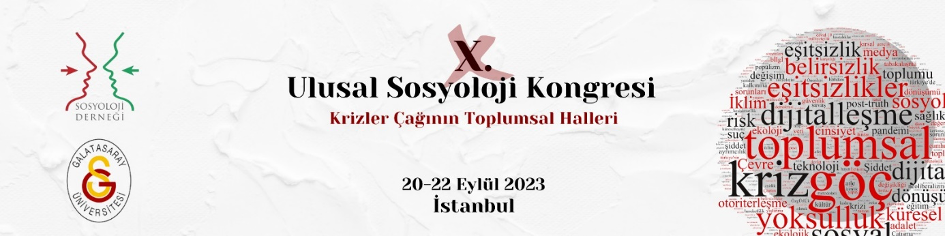
SOCIOLOGICAL ASSOCIATION of TURKEY


İSTANBUL

Istanbul is a natural gateway, offering a friendly welcome and genuine hospitality. It is a metropolis proud of its rich history and unrivalled natural beauty spread on two continents, Europe and Asia, divided by the Bosphrous.

The city has been a capital for Roman, Byzantium and Ottoman Empires. It is attractive both for the beauty of the surrounding landscape and for its historical treasures.

Beneath the unchanging skyline of Istanbul's domes and minarets you find the continual bustle and movement of the crowds, the rumbling of vehicles along the ancient cobbled streets mingling with the horns of shipping in the busy ports, all revealing magnificent vitality.

Bounding the old and the new together Istanbul offers you many treasures. You can visit the very well known mosques and monuments of Otoman Empire or the valuable Byzantine remains. For those who prefer shopping, the modern shopping malls are available with their brand goods.

Turkish cuisine is said to be one of the best of the world. Istanbul does not only offer you different traditional tastes of Turkey but also worldwide known cuisines such as Mexican, Japanese, Chinese, Italian etc. One can choose the modern and elegant restaurants or smaller ones with local flavor.

HAGIA SOPHIA (AYA SOFYA):


Aya Sophia was, for nearly a thousand years, the largest enclosed space in the world, and still seen as one of the world's most important architectural monuments. It is one of Turkey''s most popular attractions, drawn by the sheer spectacle of its size, architecture, mosaics and art.  For 916 years it was a church, then a mosque for 481 years, and since 1935 has been a museum. Thought to have been constructed by Emperor Konstantinos I (324 - 337) it was burned down during a revolt. Rebuilt by Emperor Theodosium II, it was opened for worship in 415 and once again was bur ned to the ground, during the Nika revolts of 532.

Emperor Iustanianus (527 - 565) wanted to construct something even bigger than the original two and appointed architects Isidoros from Miletos, and Anthemios from Tralles to build the Hagia Sophia which still stands. Columns, heads, marble and coloured stones were imported to Istanbul from ancient cities in Anatolia for this purpose.

The construction began on 23 December 532, and was completed exactly five years later. The main, central section measured 100m x 70m, covered with a 55m high dome which was a mammoth 30m in diameter - appearing to be a great feat of design. The mosaics are of great importance, and the oldest ones are dominated by geometric and plant motifs decorated with gold.

The worst desecration of the church was in 1204, ransacked by Catholic soldiers during the Fourth Crusade. In 1453, after a failure of the Byzantine Empire to fend off the Turks, Mehmet the Conqueror captured the city an converted it into a mosque. It was repaired several times, and Islamic ornamentation added, for example an extract of the Koran by calligrapher Izzet Efendi inscribed on the dome. The other reminders of its previous status as a mosque include huge wooden plaques bearing the names of Allah, the Prophet Mohammed and the first four caliphs.

The marble and mosaics remain the most interesting aspects today. The columns supporting the gallery are made from antique marble, and in the western gallery is the green marble which marks the position of the throne of the Empress. The impressive figurative mosaics include Virgin and Child flanked by two emperors, dating back to the late 10th century, and one depicting Christ, the Virgin, and St John the Baptists. Even though there is partial damage, the haunting images on their faces remain as strong as ever

SULEYMANIYE MOSQUE:

The Süleymaniye Mosque was built on the order of Sultan Suleiman I (Suleiman the Magnificent) and was constructed by the great Ottoman architect Mimar Sinan. The construction work began in 1550 and the mosque was finished in 1557.

Sinan considered the design to be an architectural counterpoint to the Byzantine Hagia Sophia. The Hagia Sophia, converted into a mosque under Mehmed II, served as a model to many Ottoman mosques in Istan bul. However, Sinan's Süleymaniye is a more symmetrical, rationalized and light-filled interpretation of earlier Ottoman precedents, as well as the Hagia Sophia. It is possible that dialogue between Italy and Istanbul contributed to Sinan's enthusiasm for symmetrical and rational forms, as promoted by writers like Alberti.

The design of the Süleymaniye also plays on Suleyman's self-conscious representation of himself as a 'second Solomon.' It references the Dome of the Rock, which was built on the site of the Temple of Solomon, as well as Justinian's boast upon the completion of the Hagia Sophia: "Solomon, I have surpassed thee!" The Süleymaniye, similar in magnificence to the preceding structures, asserts Suleyman's historical importance. The structure is nevertheless smaller in size than its older archetype, the Hagia Sophia.

The Süleymaniye was ravaged by a fire in 1660 and was restored by Sultan Mehmed IV. Part of the dome collapsed again during the earthquake of 1766. Subsequent repairs damaged what was left of the original decoration of Sinan (recent cleaning has shown that Sinan experimented first with blue, before turning red the dominant color of the dome). The mosque was restored again in the middle of the 19th century by the Swiss-Italian architect brothers Gaspare and Giuseppe Fossati. In a botched attempt to restore it to its supposed original glory, the dome and the semi-domes were painted in an Ottoman baroque style. During the recent cleaning the original design was faithfully restored. During World War I the courtyard was used as a weapons depot and when some of the ammunition ignited the mosque suffered another fire. Not until 1956 was it fully restored again.

HAGIA EIRENE (AYA IRINI):

Hagia Eirene ranks as the first church built in Istanbul. It was commissioned by Constantine in the 4th century, and Justinian later had it restored. The building reputedly stands on the site of a pre-Christian temple. The church of Hagia Eirene was never converted into a mosque. Since, however, it stood within the enclosure of the Saray and next to the barracks of the Janissaries it served for a long time as an arsenal. In 1846 it became a Museum of Antiquities and in 1874 a Military Museum. In 1946 the collections of armaments were removed and archaeological excavations were begun. Remains of two ancient temples, dedicated to Apollo and Aphrodite, have been discovered within and around the church. It's now a concert hall.

MUSEUM OF TURKISH & ISLAMIC ART:

Built in 1524 by İbrahim Pasha, the Grand Vizier to Suleyman the Magnificent, it was originally a palace and the grandest private residences in the Ottoman Empire - and one of the few which have survived. Some of it, however, was destroyed and rebuilt in 1843.

Now home to the museum, this is considered one of the finest collections of Islamic art in the world, with a superb display of ceramics, metalwork, miniatures, calligraphy and textiles, as well as some of the oldest carpets in the world. Equally as impressive is the grace of the building, with the central courtyard giving something of an insight into the atmosphere of the residence. Opposite is the Great Hall, which houses a collection of Turkish carpets, with exquisite antique carpets and kilims and one of the finest collections in the world, the oldest exhibit dating back to 13th century.

BASILICA CISTERN (YEREBATAN SARNICI):

Nearby Hagia Sophia is the 6th century Byzantine underground Basilica cistern, with 335 massive Corinthian columns supporting the immense chamber's fine brick vaulting. This is one of several cisterns buried into the city's foundations, and the first to have been excavated and renovated. Thought to have been built in the 4th century by the emperor Constantine, then enlarged two centuries later, it was supplied with water from Belgrade Forest, and supplied it to the Great Palace and Topkapi Palace.

It fell into disuse and was then restored in 1987 with the mud and water removed and narrow raised pathways built to provide easy access for visitors. It is the largest covered cistern in the city, measuring 140 by 70 metres.

KARIYE MUSEUM:

This is actually Kariye Mosque, once the 11th century church of St. Saviour in Chora, is considered to be the most important Byzantine monument in Istanbul, after Hagia Sophia. Whilst unremarkable in its architecture, the interior walls are decorated with superb 14th century mosaics. Illustrating scenes from the life of Christ and the Virgin Mary, these brilliantly colored paintings emb ody the vigour of Byzantine art. The restored wooden houses in the surrounding area are a good place for relaxation and refreshment.

The church was probably built in the early 12th century, of which only the nave and central apse remain. Theodore Metochites rebuilt it between 1316 and 1321, the same years from which the mosaics and frescoes date, which depict the life of Christ in picture-book fashion. There is a series of mosaics in the form of devotional panels in the narthexes, the theme of which is reflected in the frescoes in the nave and funerary chapel.

MILITARY MUSEUM:

Highlight of this museum is definitely the Mehter Takimi, the Ottoman military band, which performs every afternoon between 15.00 - 16.00. It also has a good collection of Ottoman military memorabilia, like the cotton and silk tents used by the sultans at war, and armour and weaponry like heavily decorated jambiyah daggers.

The band, which originated in 1289, became an institution which came to symbolise the power and independence of the Ottoman empire, and these musicians, who were janissaries, always accompanied the Sultans into battle. But quite apart from their benefit on the battlefield, they came to create new musical styles in Europe, and even influencing Mozart and Beethoven.

TOPKAPI PALACE:

One of the most astounding and popular places to visit in Istanbul is Topkapi Palace, the symbolic and political centre of the Ottoman Empire between the 15th and 19th centuries. It stands on the tip of land where the Golden Horn, the Sea of Marmara and the Bosphorus come together, and is a maze of buildings centered around a series of courtyards, typical of Islamic tradition. Such is the complexity of each building, it will take many hours in order to be explored efficiently. It was built between 1466 and 1478, a couple of years before the death of Fatih. Unlike any European Palace, its architecture is predominantly Middle Eastern in character. The initial construction was Cinili Ma nsion, a Glass Palace finished in 1472, and the imposing main gate facing Sultanahmet, Bab-I Humayun, and the Palace ramparts were completed in 1478.

There were originally 750 residents of the Palace, during Fatih's period, which became drastically more congested reaching 5000 during normal days and 10,000 during festivals. Extensions had to be built, and the harem was completed in 1595 during the third Sultan Murad's era, after which the harem residents were moved in from the palace at Beyazit, with a total of 474 concubines. Special tours of the Harem are available. The Harem, literally meaning "forbidden" in Arabic, was the suite of apartments in the palace belonging to the wives, concubines and children of the head of the household.

Around the Harem were the Circumcision Room, the apartments of the Chief Black Eunuch, and apartments of the sultan - in total over 400 rooms. Other highlights in the Palace are the Spoonmaker's Diamond (the fourth largest diamond in the world), the Topkapi Dagger, (a gift from Mahmut I), a vast collection of paintings and miniatures, and the Pavilion of the Holy Mantle (including a footprint, a tooth and a hair of the Prophet Mohammed).

GRAND BAZAAR (KAPALI CARSI):

During the Byzantine period the area of the Grand Bazaar was a trade center. After the Turkish conquest, two bedestens which formed the essence of today's Grand Bazaar were built between 1455-1461 by Sultan Mehmet the Conqueror in an attempt to enrich the economic life in the city. Later on as people needed more place for their trade, they also added parts outside these bedestens. In time the Grand Bazaar was formed.

Throughout the Ottoman period, the bazaar underwent earthquakes and fires and was restored several times.

Today, shops selling the same kind of merchandise tend to be congregated in their own streets or in hans as the original Ottoman system. In addition to two bedestens there are also 13 hans in the Grand Bazaar.

With 18 entrances and more than four thousand shops it is one of the greatest markets in the world. The atmosphere of the Grand Bazaar is very interesting for tourists and has consequently become a very popular place for foreign visitors.

It is open during working hours on weekdays, closing earlier on Saturdays, while on Sundays and religious holidays it is closed.

EGYPTIAN BAZAAR (MISIR CARSISI):

It was built in 1664 as a part of the Yeni Cami complex which is located next to it. Misir in Turkish means Egypt and it is called the Egyptian Bazaar because the shopkeepers used to sell spices and herbs which w ere brought from or through Egypt. During the Ottoman period it was known as a place where shops sold only spices. Today there are only a few spice and herb specialists. The rest sell dried fruit, borek, basket work, jewelry, haberdashery, drapery and suchlike.

The bazaar has an "L" shape with six gates. Similar to the Grand Bazaar, it is open on weekdays and only half a day on Saturdays.


DOLMABAHCE PALACE:

Built in the reign of Sultan I Abdulmecit during the 19th century, this over-ornate palace lies along the European coast of the Bosphorus. Dolmabahce Palace was constructed between 1843 and 1856, mixing d ifferent European artistic influences and built by Abdulmecit's architect, Karabet Balya. It was built over three levels, and symmetrically planned, with 285 chambers and 43 halls. It has a 600m long pier along the bosphorus, with two huge monumental gates. The palace is surrounded by well-maintained and immaculate gardens, with an immense 56-columned greeting hall, with 750 lights illuminated from 4.5 tonnes of Bohemian chandelier. The entrance was used for meeting and greeting Sultans, and opposite the ceremonial hall was the harem. The interior decoration, furniture, silk carpets and curtains all remain with little defect.

The palace has a level of luxury not present in most other palaces, with walls and ceilings decorated with gold, and European art from the period. Top quality silk and wool carpets, southeast Asian hand-made artifacts, and crystal candlesticks adorn every room. The men's hamam (public bath) is adorned with alabaster marble, and the harem also encloses the Sultan's bedrooms and the women and servants' divisions. One of the highlights is the throne room, which stands at an amazing 36-metres high – almost twice the height of the rest of the rooms. The east wing is home to the Museum of Fine Arts.

CIRAGAN PALACE:

The most picturesque spots along the Bosphorus and Golden Horn were reserved for the palaces and mansions for the Sultans, and other important dignitaries, most of which have now gone. This huge palace was constructed by architect Serkis Balyan in 1871, as appointed by Sultan Abdul Aziz, from the ruins of the old palace.

The interior was rebuilt, at a cost of four million gold coins, beginning with covering the ceiling with wood and t he walls with marble. The rooms were decorated with rare carpets, furniture, gold and silver. The sides of the building were decorated with coloured marble, and monumental gates connected it to Yildiz Palace, via a bridge, which is how the harem women went between the two, in total privacy.

It briefly housed the Turkish Parliament from 1908 to 1910, but was destroyed by a fire two years later, and was only rebuilt in 1991. Now, it is Istanbul's premier luxury hotel, and has retained something of its former glory.

BEYLERBEYI PALACE:

Beylerbeyi, in which the Asian Tower of Bosphorus Bridge was constructed, is a beautiful district allotted for palaces since the Byzantium era. Sultan Abdulaziz built the Palace, to replace the older, wooden palace, between 1861 and 1865. Eastern and Turkish motifs were used with Western design elements, on the sides and for internal decoration, and the atmosphere is something re sembling that of Dolmabahce Palace.

The building comprises of three floors, and contains 26 rooms and six halls, which includes the harem and men's greeting rooms. The interior is decorated with Bohemian chandeliers, valuable tiles and ceramic vases. Silver-edged furniture and luxurious carpets add something to the beauty, and even till today the authentic furniture, carpets, curtains and other property have been well preserved.

A huge pool, terraces and stables, face the back cliff. A road and tunnel, used until 1970, passed under the palace garden and were used by the most distinguished foreign dignitaries when visiting the palace.

MAIDEN'S TOWER (KIZ KULESI):

Considered to be symbolic of Istanbul, this tiny tower was established on a small island at the southern entrance of the Bosphorus. In the past, it was used as a watchtower and a lighthouse. It's now a touristic fascility. Western sources describe this as Leander's Tower, who was drowned while swimming, to reach his lover Hera. Another story suggests that it was a tower where an emperor's daughter put her there for security, having dreamt that she would be bitten by a snake.

Other Places of Interest in Istanbul

With more time in Istanbul the following places are worth visiting or experiencing:

  • Archeological Museum of Istanbul in the old city, near the Topkapi Palace,
  • Mihrimah Sultan Camisi (Mosque), in Edirnekapi,
  • Nostalgia at French writer Pierre Loti's (1850-1923) favorite cafe in Eyup; Cafe Pierre Loti,
  • Pera Palas Hotel, a place where Agatha Christie and many other celebrities have stayed,
  • Walk from Taksim Square into Istiklal Street (Beyoglu), a pedestrian street with an old tram line, old buildings, modern shops and cinemas,
  • A typical local dinner in one of the restaurants in Cicek Pasaji (Flower Passage), also on the Istiklal street,
  • A typical local fish dinner in one of many restaurants in Kumkapi; gypsies make music too,
  • Mehter (Military) Band Concert at the Military Museum in Harbiye,
  • Ortakoy at the base of the Bosphorus Bridge on the European side. An array of cafe-bars in the old narrow lanes. Open air craft market stalls on Sundays.
  • Experience a Turkish Hamam; Galatasaray Hamami (Istiklal St.), Cagaloglu Hamami (Yerebatan St.)